 Behind the Badge

Austin Demski was just a Cub Scout when he had an awakening about the dangers of wildfires. During a camping trip, the 2003 Cedar Fire of San Diego County raged, hopping a freeway and progressing in ways young Austin didn’t think were possible.
Fortunately, his home wasn’t personally affected, but the saga got him thinking.
After graduating from Bentley University in Boston, he landed an internship and job in Irvine. Demski had studied finance, biotech, and sustainable chemistry, always wanting to learn about the world around him.
Demski moved into his home in the Portola Springs area in December 2019, on the outer edge of Irvine, closer to wildlife and undeveloped areas — which, unfortunately, can be highly susceptible to wildfires. On Oct. 26, 2020, the Silverado Fire kicked off early in the morning. He distinctly remembers that day. He awoke to the smell of smoke. Like a tornado chaser, he felt the urge to get closer.
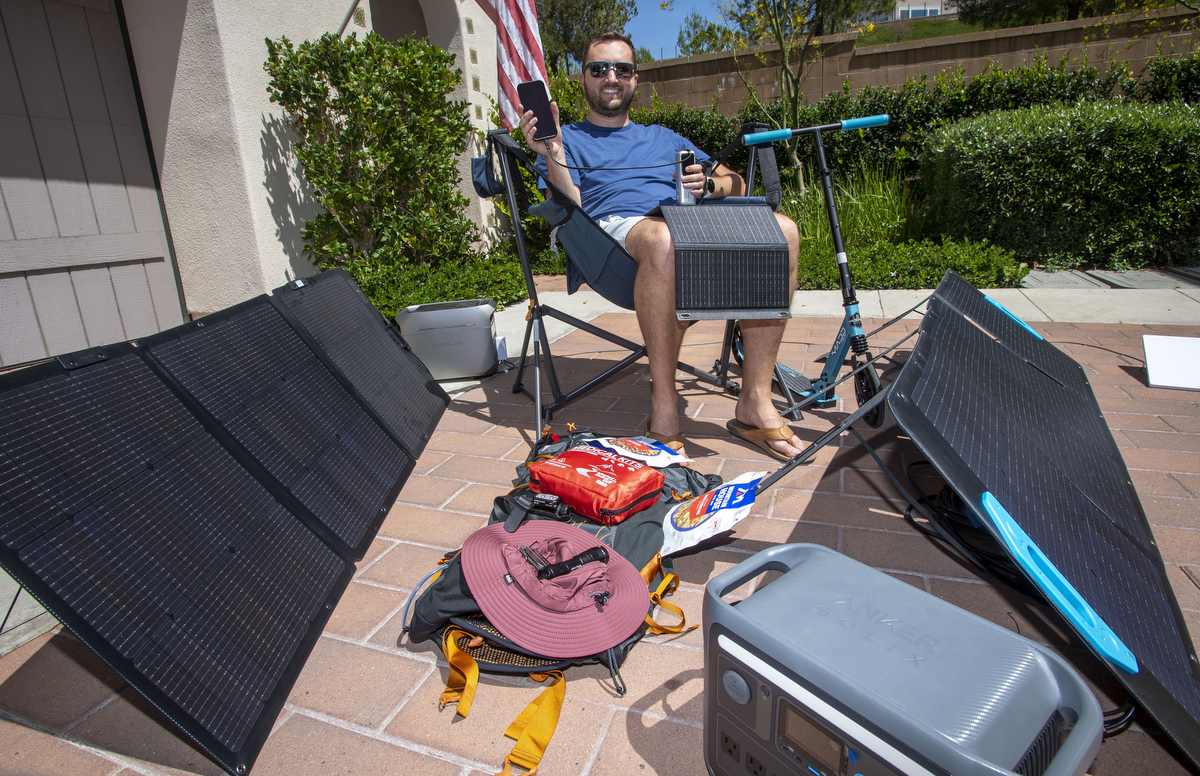
Austin Demski of Irvine with some of his emergency preparation supplies.
Photo by Michael Goulding / for Behind the Badge
His fiancé from Boston, who was living with him, wasn’t familiar with wildfires. She thought “campfire.” He sensed the danger and opened an app called Watch Duty, which allows for real-time monitoring. He also saw the inevitable: a giant plume of smoke.
Demski drove about 10 minutes up the road into Irvine’s Orchard Hills community to get a better look. His car was sandblasted by wind. It was, he admits, an adrenaline rush. But moreover, it was dangerous.
“I knew from the Cedar Fire that I’m not waiting until being told what to do,” he recalls. “I’m evacuating.”
Demski and his fiancé packed their things: photos, childhood memorabilia, important documents, personal electronics. For insurance purposes, he took a video of everything in the house, which wasn’t much at the time.
“A lot of things are more replaceable than you think they are,” he says.
Demski had the wherewithal to set up cameras so he could see the fire encroaching. He and his fiancé were ready to leave in 30 mins just as Irvine police started urging everyone to evacuate his street.
The two stayed with family nearby, and fortunately their home was spared, aside from some smoke damage and ash basically everywhere.

Austin Demski of Irvine has taken steps to be prepared for emergency situations.
Photo by Michael Goulding / for Behind the Badge
The experience opened up a floodgate to being better prepared next time.
“I need to actually do something here, not just talk,” Demski recalled.
He asked his HOA about innovative methods that can curtail wildfire movement and support the efforts of the Orange County Fire Authority. He started coordinating with a like-minded neighbor. He participated in the CERT program through the Irvine Police Department, as well as the Irvine Police Department community police academy. He also took County, FEMA, and Red Cross training. He started volunteering at events, learning more about medical triage, search and rescue, and how to organize before, during and after a disaster.
He joined Portola Springs’ emergency preparedness committee, where he now serves as Vice Chair. All these experiences fueled his passion for learning, growth, and helping out. Emergency preparedness and self reliance became a hobby.
“My biggest advice is: Do not make emergency preparedness feel overwhelming,” he says. “Start small, start practical, and build from there.”
It’s not about being survivalists, he noted, but taking care of your family (and maybe immediate neighbors) for at least a few days after an emergency. This could include water, food, medications, batteries, flashlights and device-charging capability to get through several days without outside help.
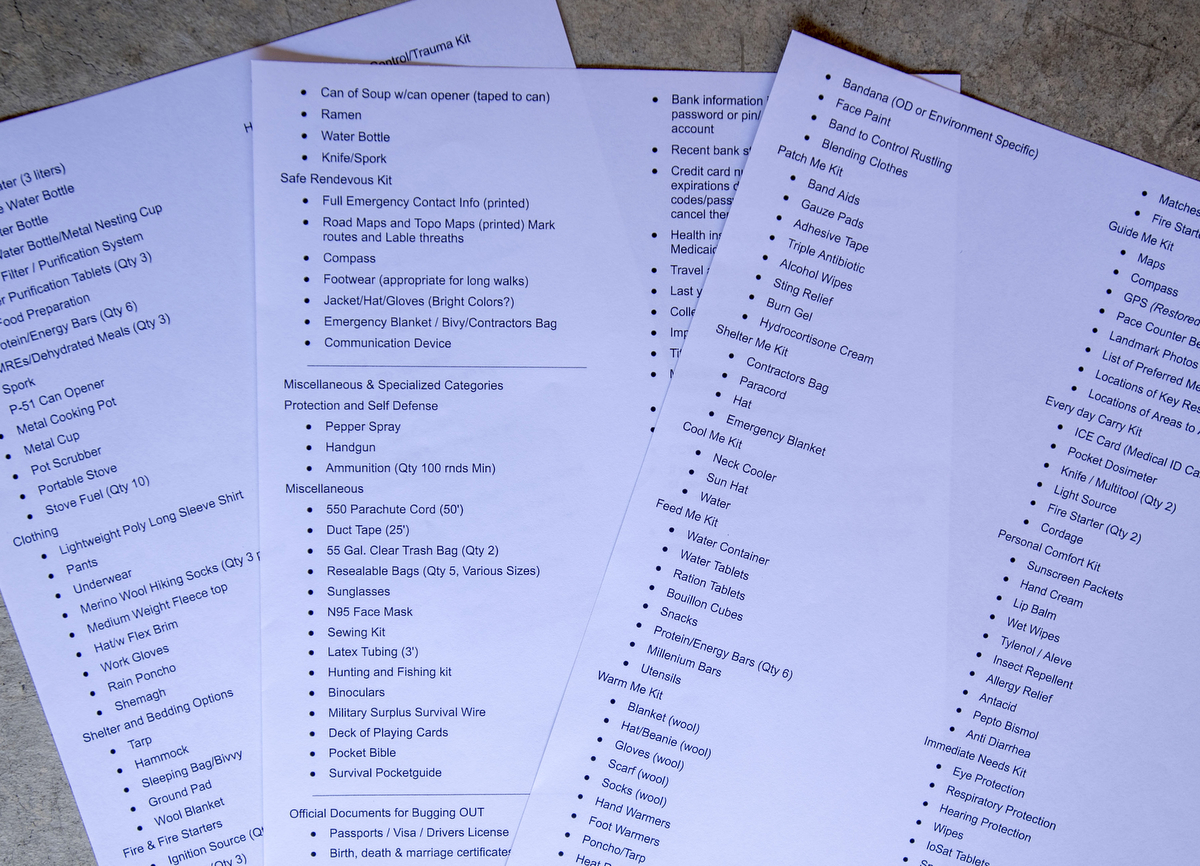
Austin Demski’s checklist of emergency preparation supplies.
Photo by Michael Goulding / for Behind the Badge
Demski said it’s important to realize that professional responders will not be able to reach everyone in a timely manner, and it’s not because they’re incapable.
“It is because the scale of the event will overwhelm the system,” he added. “So the question becomes: What can we responsibly do before disaster strikes to reduce the burden on first responders and improve outcomes for our own community?”
His other tips include having a way to communicate if cell service is down, knowing how to shut off gas and water to your home, and having copies of important documents.
“And then, once you have your own household squared away,” Demski shared, “start thinking about your street, your block, and your neighborhood. That is where preparedness becomes more powerful. A single prepared household is good. A prepared neighborhood is much stronger.”
ReadyOC is Orange County’s emergency preparedness site “aimed at educating and empowering Orange County residents, businesses, and the community to better prepare for emergency situations.” ReadyOC provides resources that can help you prepare with a kit, at work, and at home.
Sign up for the ReadyOC newsletter to receive local updates, public safety alerts, and tips.